Cost for Application Development: Web vs Mobile Explained
Understanding the cost for application development is one of the most important steps before starting any digital product. One of the first and biggest decisions you'll face is choosing between a web application and a mobile application — and that choice has a direct impact on budget, timeline, and long-term costs.
In this guide, we'll break down how web and mobile application development costs differ, what factors drive pricing, and how to estimate your project realistically.
What Does "Cost for Application Development" Mean?
The cost for application development is the total investment required to design, build, test, launch, and maintain an application.
It typically includes:
- Team labor (developers, designers, QA)
- Design and UX work
- Feature development
- Technology stack
- Testing and quality assurance
- Deployment and post-launch support
- Maintenance and updates
The final cost depends not just on what you build, but how and for which platform.
Web Application vs Mobile Application: Key Differences
Before comparing costs, it's important to understand how web and mobile applications differ technically.
Web Applications
- Run in a browser (Chrome, Safari, Firefox)
- One codebase for all users
- Deployed on servers
- Updated instantly for everyone
Mobile Applications
- Installed on devices (iOS, Android)
- Often require separate builds per platform
- Must follow App Store / Google Play guidelines
- Require device-specific testing
These differences directly affect development effort and cost.
Cost for Web Application Development
Web applications are usually more cost-efficient, especially for early-stage products and MVPs.
Typical Cost Drivers for Web Apps
- Single platform development
- Shared backend for all users
- Faster iteration cycles
- Lower testing complexity
Cost Breakdown (Typical Ranges)
- Simple web app: lower cost, shorter timeline
- Medium-complexity web app: custom UI, authentication, dashboards
- Complex web app: real-time features, integrations, advanced analytics
Web apps are ideal when:
- You want faster time to market
- Budget is limited
- Cross-platform access is required
- Frequent updates are expected
Cost for Mobile Application Development
Mobile application development usually costs more due to platform fragmentation and higher quality requirements.
Why Mobile Apps Cost More
- Separate iOS and Android builds (or additional abstraction layers)
- Native UI and UX standards
- App store compliance and reviews
- Device and OS version testing
- Ongoing updates for OS changes
Cost Breakdown (Typical Ranges)
- Single-platform app (iOS or Android): medium cost
- Cross-platform app: higher initial complexity, lower long-term cost
- Fully native iOS + Android apps: highest cost
Mobile apps are ideal when:
- You need deep device integration
- Offline access is required
- Performance is critical
- Push notifications are core to the product
Feature Complexity: The Biggest Cost Multiplier
Regardless of platform, features drive the majority of application development cost.
Common high-impact features include:
- Authentication and security (login, 2FA)
- Payments and subscriptions
- Real-time chat or notifications
- Advanced search and filtering
- Admin panels and user management
- Analytics dashboards
- Third-party integrations
Each feature increases:
- Frontend development time
- Backend logic
- Testing and QA effort
- Long-term maintenance cost
Design and UX Costs: Web vs Mobile
Design requirements also differ significantly.
Web Design Costs
- Responsive layouts
- Browser compatibility
- Fewer UI constraints
Mobile Design Costs
- Platform-specific UI guidelines
- Gesture-based interactions
- Multiple screen sizes
- App store UX standards
Mobile design often requires more iteration and testing, increasing overall cost.
Testing and Quality Assurance Costs
Testing is a critical but often underestimated part of application development cost.
Web App Testing
- Browser compatibility testing
- Functional testing
- Performance checks
Mobile App Testing
- Device testing (phones, tablets)
- OS version compatibility
- App store compliance testing
- Performance and battery usage
Best practice is allocating 15–25% of total development time to testing — especially for mobile apps.
Maintenance and Long-Term Costs
The cost for application development doesn't end at launch.
Ongoing Costs Include:
- Bug fixes
- Performance optimization
- Feature updates
- Security patches
- Platform and OS updates
- Infrastructure and hosting
Mobile apps generally require more frequent updates, especially after iOS and Android releases.
Web vs Mobile: Cost Comparison Summary
| Factor | Web Application | Mobile Application |
|---|---|---|
| Initial cost | Lower | Higher |
| Platforms | Single | iOS, Android, or both |
| Development speed | Faster | Slower |
| Testing effort | Medium | High |
| Maintenance | Lower | Higher |
| App store approval | No | Yes |
How to Estimate Your Application Development Cost Accurately
The most accurate estimates come from breaking your project into:
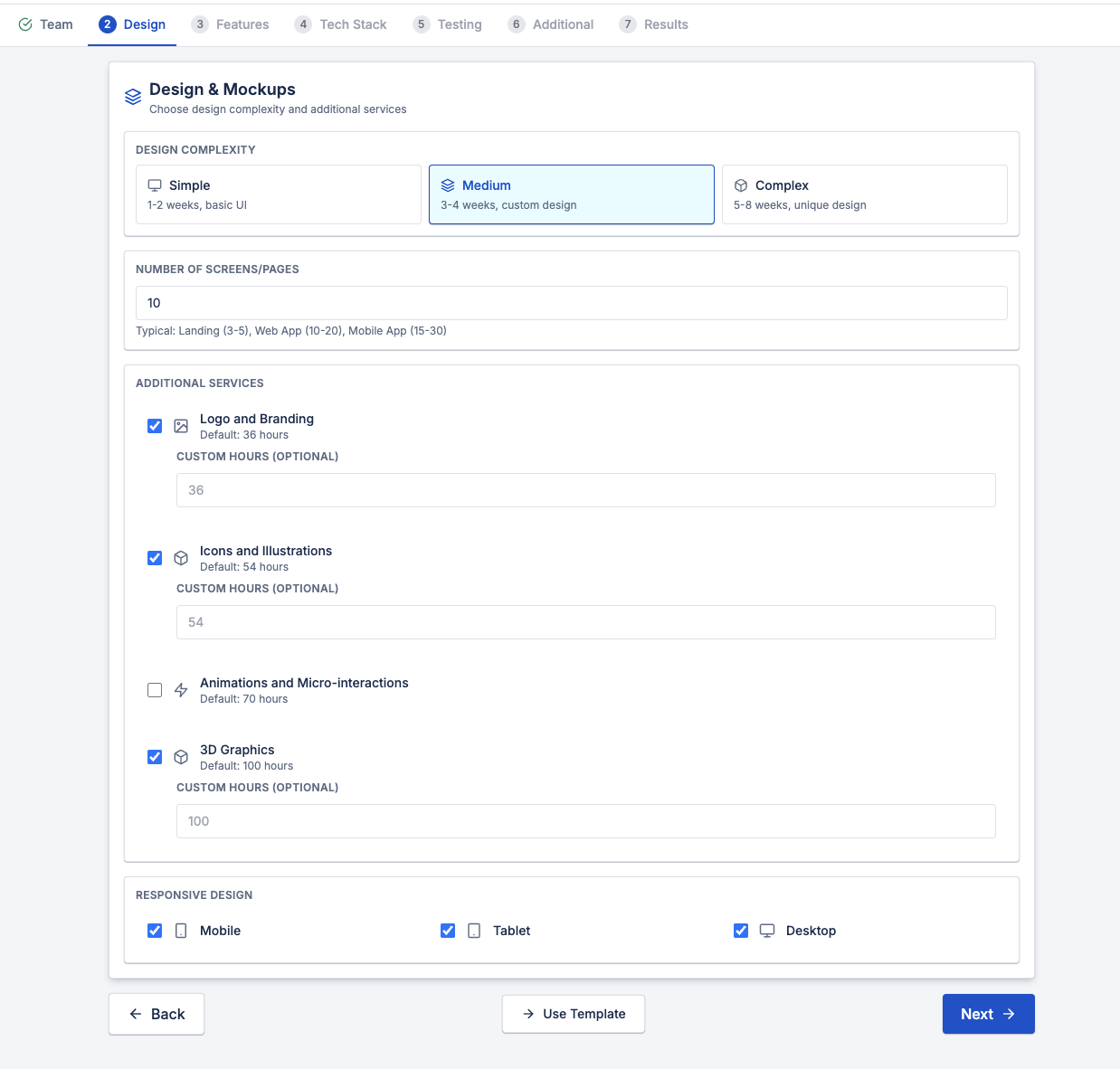
At Projekto, we provide tools to help you estimate your application development cost accurately.
- Team roles and rates
- Design complexity
- Feature list
- Technology stack
- Testing requirements
- Post-launch support
Using a structured cost calculator helps avoid surprises and unrealistic expectations. If you want a detailed breakdown based on your exact requirements, you can use a project cost calculation tool to model different scenarios for web and mobile apps.
Final Thoughts
There is no one-size-fits-all answer to the cost for application development.
The right choice depends on:
- Your product goals
- Target users
- Budget constraints
- Long-term roadmap
For many teams, starting with a web application and expanding to mobile later is the most cost-effective strategy. Others may require mobile-first development from day one.
Understanding these trade-offs early can save months of time and thousands in budget.
Frequently Asked Questions
What is the cost for application development?
The cost for application development is the total expense required to design, build, test, launch, and maintain an application. It depends on the chosen platform, feature complexity, design requirements, development team, and long-term maintenance needs.
Is web application development cheaper than mobile app development?
In most cases, web application development is cheaper because it targets a single platform and does not require separate builds for iOS and Android. Web apps also typically require less testing and have faster update cycles.
Why does mobile application development cost more?
Mobile application development often costs more due to platform-specific requirements, native user interface standards, app store compliance, extensive device testing, and ongoing operating system updates.
How does feature complexity affect application development cost?
Feature complexity has a direct impact on application development cost. Advanced features such as authentication, payments, real-time communication, and third-party integrations increase development time across frontend, backend, and testing.
Does application development cost include maintenance?
Yes. A realistic application development cost should include ongoing maintenance such as bug fixes, performance improvements, security updates, and compatibility adjustments with new platform releases.
Can application development cost be estimated before development starts?
Yes. High-level application development cost can be estimated early based on assumptions about features, design complexity, team structure, and technology stack. Estimates become more accurate as requirements are refined.